
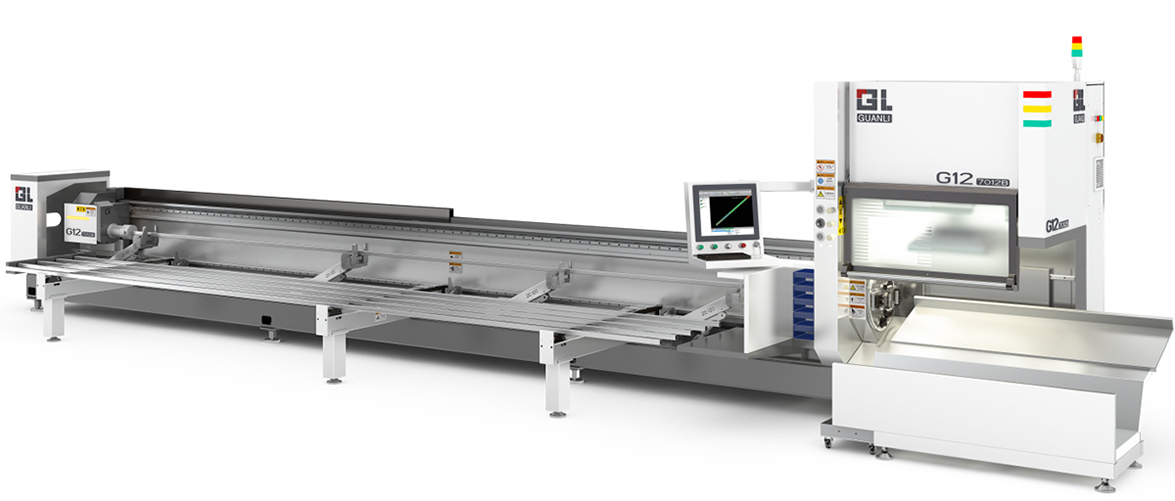
Product Paramenters:
Key Advantages and Features
High speed: The chuck reaches a maximum speed of 160 RPM with 1.5G acceleration, delivering high cutting efficiency. The standard configuration and overall machine price are highly competitive.
Material saving: Chuck avoidance design enables an ultra-short tailing of 20–45 mm, breaking industry records and improving material utilization.
Wide compatibility range: Suitable for tube diameters from Φ10 to 120 mm, compatible with round tubes, square tubes, oval tubes, and special-shaped tubes, with particularly strong performance on thin-walled tubes.
High-precision chuck: One-time clamping with no need to change jaws. Clamping force is controlled in real time and remains stable, ensuring more consistent machining accuracy. The chuck features automatic internal lubrication, reducing maintenance and providing more stable operation.
Automatic loading: Side-hung machine bed structure, equipped as standard with a semi-automatic loader, with a high loading cycle time of 18–19 seconds.
Stability: Combines servo follow-up and pneumatic support to prevent tube swinging and ensure highly stable cutting.
Low cost: No high-cost consumables. The main operating costs are electricity, protective lenses, and copper nozzles (comprehensive cost: RMB 13–15 per hour).
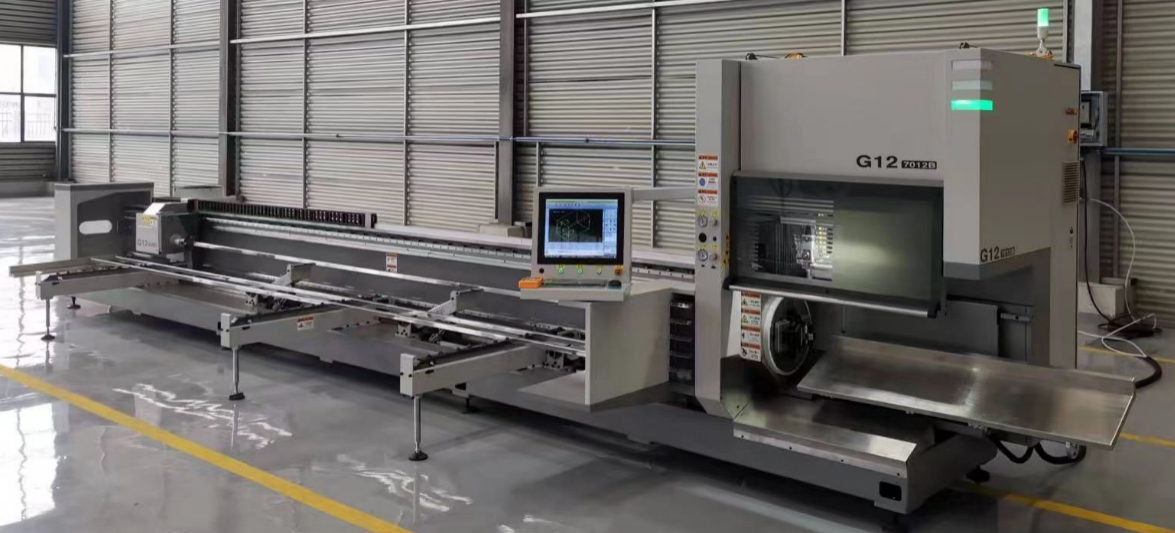
Key component configuration
| No. | Component Name | Brand | Model / Origin |
|---|---|---|---|
| Key Components | |||
| 1 | Fiber Laser Source | Raycus / Chuangxin | 3000W / Domestic first-tier brand |
| 2 | Cutting Head | Guanli | 3000W / Domestic first-tier brand |
| 3 | Rack and Pinion | YYC, Taiwan | M2-6 grade / Taiwan, China |
| 4 | Reducer | Shimpo, Japan | 090 / China |
| 5 | Linear Guide Rail | AIRTAC, Taiwan | CGH30 / China |
| 6 | Motor | Huichuan / Aichuan (optional) | High-performance motor, maximum 4000 rpm, absolute encoder type |
| 7 | Dust Extraction Unit | Dust collection fan (optional) | Domestic first-tier brand |
| 8 | Water Chiller | Hanli / S&A | Domestic first-tier brand |
| 10 | Electrical Control Components | Schneider, France | China |
| 11 | Pneumatic Components | AIRTAC, Taiwan | China |
| Machining Components | |||
| 12 | Main Machine Bed | Independently developed, Suzhou | 8.5 m / high-temperature annealing at 600°C |
| 13 | Chuck | Independently developed, Suzhou | QL-125 pneumatic / continuous supply clamping support |
| 14 | Auxiliary Loading and Servo Floating Support Rack | Independently developed, Suzhou | 4 supports / load capacity 50 kg |
| 15 | Semi-automatic Loading Device | Independently developed, Suzhou | 3 conveyor units, stores 5 tubes for automatic continuous loading |
| 16 | Unloading Device, Unloading Frame | Independently developed, Suzhou | 20 kg per meter, maximum unloading length 2.0 m (4 m optional) |
| Software System | |||
| 17 | Operating System | Shanghai Bochu | Bus control system / Shanghai |
| 18 | Nesting Software | Shanghai Bochu | Dedicated 3D tube cutting software / Shanghai |
| Others | |||
| 19 | Operation Direction | Left-hand machine | Standard |
| 20 | Packaging and Transportation | Standard packaging | Standard |
Note: The machine uses industrial power supply 380V ±5V. Customers need to install a voltage stabilizer according to actual local conditions.
Component technical parameters
| Component Name | Attribute | Parameter Value |
|---|---|---|
| Laser Source | Output Power | 3000W |
| Working Mode | Continuous Fiber | |
| Fiber Core Diameter | 50 μm | |
| Cooling Method | Water Cooling | |
| Cuttable Materials | Carbon steel, stainless steel, aluminum alloy, brass, copper and other metals | |
| Machine Bed | Structure | Tube-and-plate welded structure |
| Length | 8.5 m | |
| Chuck | Chuck Model | QL125 |
| Working Mode | Pneumatic | |
| Load Capacity | 50 kg | |
| Cutting Head | Collimating Focal Length | 125 mm |
| Focusing Focal Length | 100 mm | |
| Focus Adjustment Speed | 100 mm/s (not applicable to manual focus adjustment) | |
| Assist Gas Pressure | ≤3 MPa | |
| Water Chiller | Cooling Medium | Distilled water / deionized water |
| Ambient Water / Chilled Water Setting | 30 / 20 (adjustable) | |
| Water Temperature Control Accuracy | ±0.1°C | |
| Water Pump Flow Rate | 10 L/min | |
| Water Pump Head | 20 m |
Overall technical parameters
| Category | Attribute | Parameter Value |
|---|---|---|
| Equipment Specifications | Equipment Series | Small Platform: 125 Series |
| Overall Dimensions (mm) | 9600 × 3300 × 2300 | |
| Total Weight (t) | 4.2 T | |
| Total Power Consumption (kW) | 20–25 | |
| Operating Temperature (°C) | 0–40 | |
| Processing Range | Processing Stroke (mm) | Round tube: Φ10–Φ120 Rectangular tube max.: 50–100 Square tube: □10–□80 |
| Cutting Kerf Width (mm) | 0.1–0.2 | |
| Travel Range | Single Chuck Clamping Stroke (mm) | Φ10–Φ120 |
| Y/X/Z/U Axis Stroke (mm) | 7000 / 150 / 250 / Infinite Rotation | |
| Repeat Positioning Accuracy / Speed | X/Y Axis Positioning Accuracy (mm) | ±0.031000 (7000 ±0.06) |
| X/Y Axis Repeat Positioning Accuracy (mm) | ±0.03 | |
| U Axis Rotary Repeat Positioning Accuracy (arcmin) | ≤5 | |
| Maximum U Axis Rotation Speed (RPM) | 130 Huichuan / 160 Aichuan | |
| Speed and Acceleration | Maximum X/Y Axis Acceleration | 1.5G |
| Maximum X Axis Rapid Traverse Speed (m/min) | 100 | |
| Maximum Y Axis Rapid Traverse Speed (m/min) | 130 Huichuan / 160 Aichuan | |
| Loading Parameters | Manual Loading (mm) | 3000–7000 |
| Automatic Loading Length (mm) | 5800~6450 (non-standard option: 5000~7000) | |
| Cycle Loading Time (s) | Initial loading ≤50, subsequent loading ≤20 | |
| Loader Capacity (kg) | 300 | |
| Maximum Single Tube Weight for Manual Loading (kg) | 50 | |
| Maximum Single Tube Weight for Automatic Loading (kg) | 50 | |
| Unloading Parameters | Tail Material Length (mm) | Outer chuck 45 (inner chuck 20) |
| Maximum Unloading Length (mm) | Standard 2000 (optional 4000) |
Key Components and Motion Control
1. Machine Bed
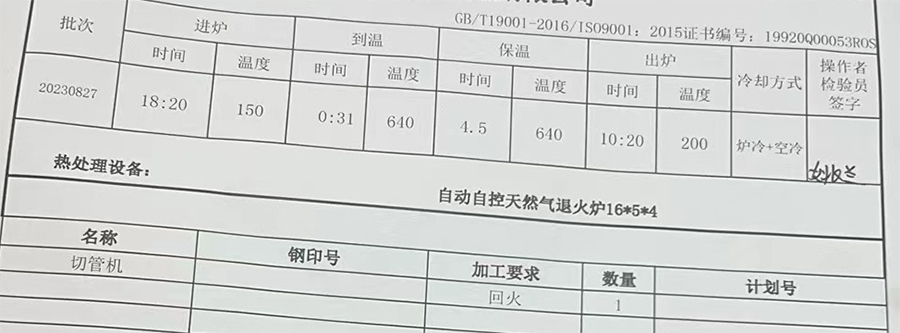
The machine bed is fabricated from welded steel plates and tubular sections. After welding, it undergoes high-temperature stress-relief annealing at 600°C, is held at that temperature for 4.5 hours, and then slowly cooled in the furnace to 200–300°C before being removed for air cooling. This process effectively eliminates internal stress in the bed. After rough machining, it is then precision machined, which greatly improves the rigidity and stability of the machine tool and ensures long-term stable accuracy.
The machine adopts a side-mounted structure and can be equipped with an automatic loading system, which effectively improves loading efficiency and makes unloading more convenient.
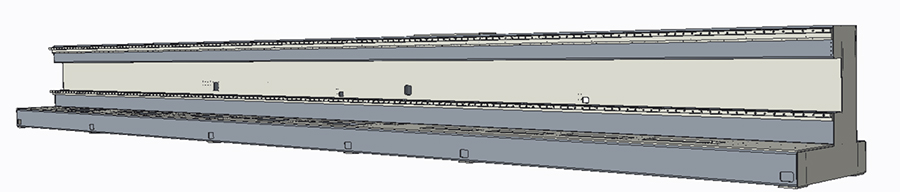
1.1 Rigidity
The machine bed is welded from steel plates and tubular sections. Its structure is reinforced by multiple ribbed tube-and-plate connections linking the transverse and longitudinal sections of the bed, ensuring excellent rigidity.
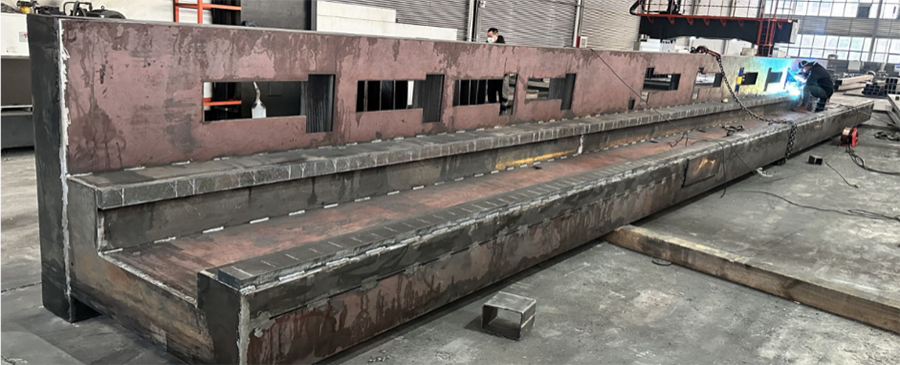
1.2 Welding:
The weld seams on both sides are evenly distributed, and symmetrical as well as staggered welding is adopted to reduce welding deformation. An annealing report is provided for each machine bed according to its individual serial number.
2. Semi-automatic Loading and Unloading System
It can realize automatic loading of four raw materials at a time. The loading process is matched with a centering clamping jaw for positioning, while the rear clamp accurately grips the profile and pushes it forward into the front clamp.
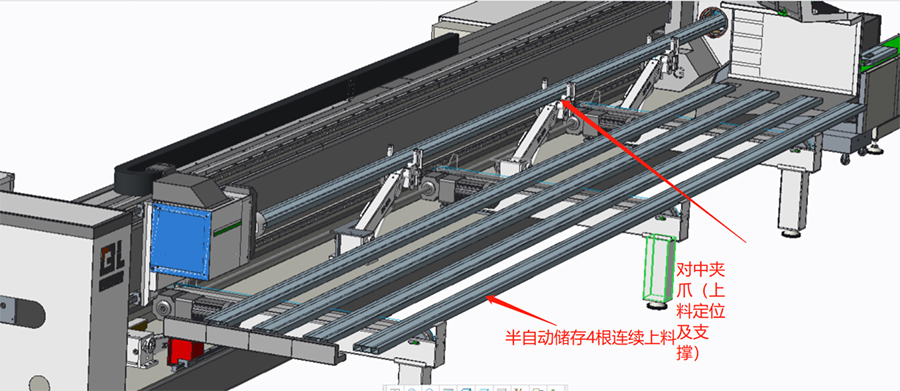
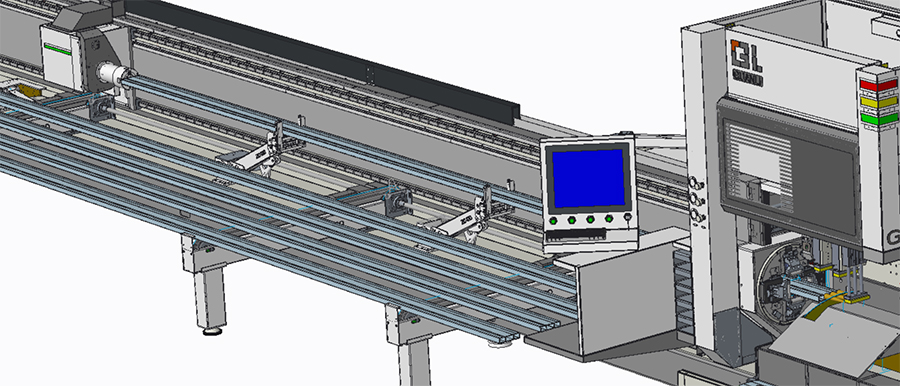
2.1 The standard machine can store up to 5 pieces of material for continuous loading. For a capacity of more than 5 pieces, customization is required.
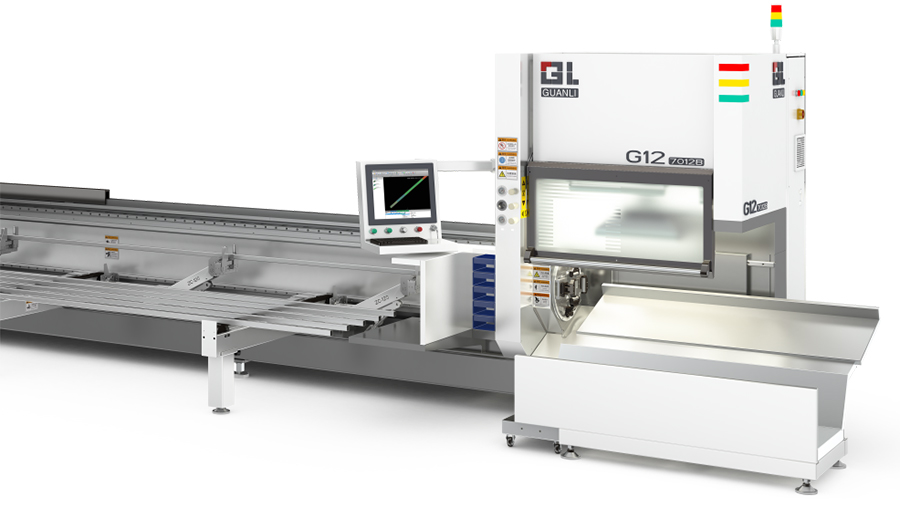
2.2 A pneumatic flip support is used to lift and support the tube during processing, reducing tube swinging and preventing accuracy deviations caused by such movement.
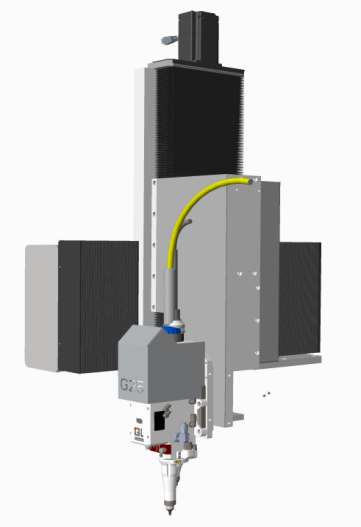
3. Gantry, X-Axis, and Z-Axis Assembly
3.1 The gantry is annealed to eliminate internal stress, ensuring the rigidity and stability of the moving components of the laser head. During operation, the travel is controlled by limit switches, and elastic buffer pads are also installed at both ends as mechanical travel limits to ensure the safety of system operation.
3.2 The Z-axis assembly is mainly used to achieve the vertical movement of the laser head. The up-and-down motion of the laser head is controlled by the CNC system through a servo motor, which drives a linear module to move the Z-axis slide plate up and down in a reciprocating manner. Proximity switches are installed at both the upper and lower ends to control the travel, ensuring safe and reliable operation.
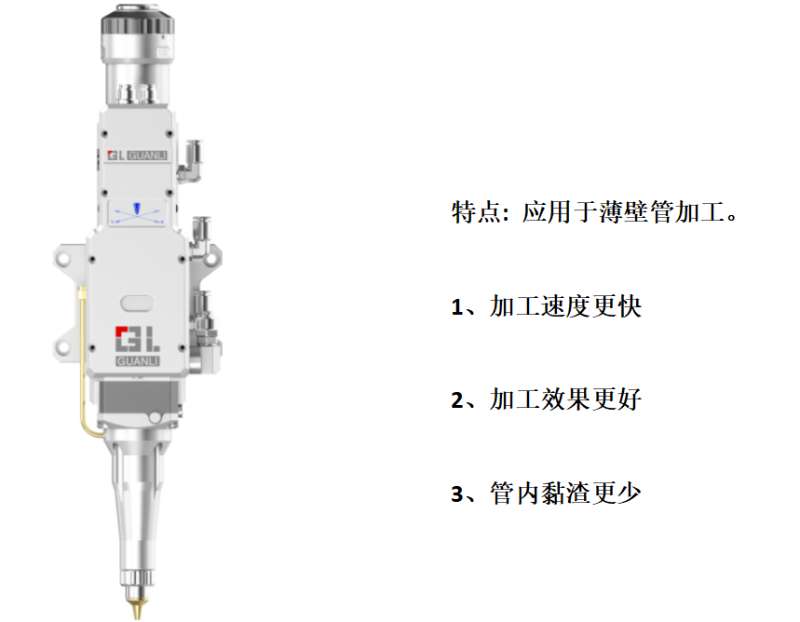
4. Cutting Head and Follow-up System
4.1 The sealing performance of the protected area is monitored in real time, effectively extending the service life of the protective lens and ensuring stable production.
4.2 The cutting head is designed with anti-collision protection, effectively reducing the probability of factory return. No on-site after-sales service is required, as customers can replace it themselves, resulting in lower maintenance costs.
4.3 A dust-proof cover is added to the optical lens area to improve the sealing level of the core chamber and extend the service life of the core lenses.
4.4 Equipped with a high-precision capacitive sensor automatic tracking system, it can achieve highly stable Z-axis floating under system control, preventing height errors caused by thermal stress deformation or uneven tube surfaces during tube cutting.
5. Cooling System
A well-known domestic brand professional laser chiller is adopted, featuring good stability and high precision. It is equipped with a dual-circuit temperature control system, which can separately control the temperatures of the laser source and the cutting head. With dual-temperature and dual-control functions, it more effectively ensures the stability of both the laser source and the cutting head.
Its functions include water pressure alarm, high-temperature alarm, low-temperature alarm, voltage alarm, and various fault alarms.
Dedicated cooling system for laser equipment, detailed parameters.
| Category | Parameter Value |
|---|---|
| Product | Dual-Temperature Dual-Control Water Chiller for Laser Use |
| Input Power Supply | 220V / 50HZ |
| Cooling Medium | Distilled Water / Deionized Water |
| Water Temperature Control Accuracy | ±0.1°C |
6. Electrical Control System (FSCUT Bus System)
The electrical control system of the fiber laser tube cutting machine mainly consists of the FSCUT CNC system, the servo system, and the low-voltage electrical system. It is equipped with a high-performance FSCUT CNC system, which is a PC-based CNC system developed on the Windows platform, featuring fast interpolation calculation and convenient operation.
The servo system adopts imported AC servo motors and drives, offering stable and reliable performance, excellent dynamic characteristics, strong load capacity, and easy operation.
The machine’s soft keys provide different functions under different operating modes, thereby reducing the number of operation buttons and simplifying the control panel. In all modes, the operating functions are displayed through menus, making operation more intuitive.
6.1 CNC System
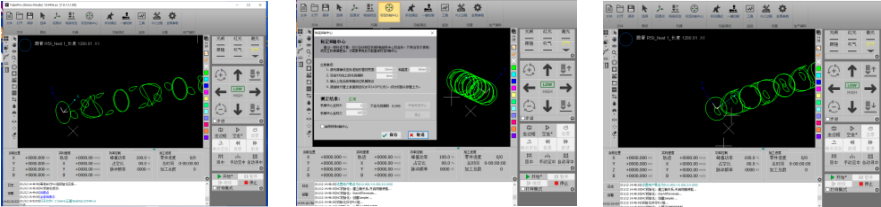
6.2 Advantages of the CNC System:
1) Based on a real-time bus system and follow-up control technology, tube corner cutting is faster, with efficiency up to twice that of the industry standard. Corner following is more stable, and cutting quality is more reliable. It allows processing of certain graphics and supports positioning to any point during stop or pause, resuming machining from any position. It also supports fixed-height cutting, automatic edge finding, off-part piercing, and head lifting.
2) Supports segmented piercing, progressive piercing, and pre-piercing. Separate laser power, frequency, laser mode, gas type, gas pressure, and follow-up height can be set independently for the piercing process and the cutting process.
3) Supports segmented piercing, progressive piercing, and pre-piercing. Separate laser power, frequency, laser mode, gas type, gas pressure, and follow-up height can be set independently for the piercing process and the cutting process.
4) Provides flexible and diverse automatic sorting and manual sorting functions, and supports partially fixed processing sequences through grouping. It also features a unique machining sequence preview function, offering a more interactive way to view the processing order than conventional simulation.
5) Lead-in and lead-out lines, kerf compensation, and other parameters can be set in a what-you-see-is-what-you-get manner. It automatically distinguishes between inner and outer contours and determines the kerf compensation direction accordingly, while also performing lead line inspection.
6) Features a unique one-click calibration function for square tube leveling and automatic positioning of the tube’s rotational center.
6.3 Other Functions of the CNC System:
Tube surface height tracking control (follow-up function)
Retract function
Breakpoint return function
Edge finding function
Kerf compensation function
Pulse cutting control function
Leapfrog function
Import of multiple part types
Nesting function
Fast conversion and batch file processing
Efficient automatic nesting function
Process database can be set according to different materials and thicknesses
Contour inspection and graphic optimization functions
Automatic optimization of cutting paths
Comprehensive expert process library and flexible manual process adjustment
Supports marking and small-hole marking
Micro-joint function
Weld seam compensation
6.4 Multiple Alarm Functions
The CNC system of this machine is equipped with self-diagnosis alarm and automatic protection functions. It can also provide alarm display and automatic protection for external conditions.
7. Low-voltage Electrical System
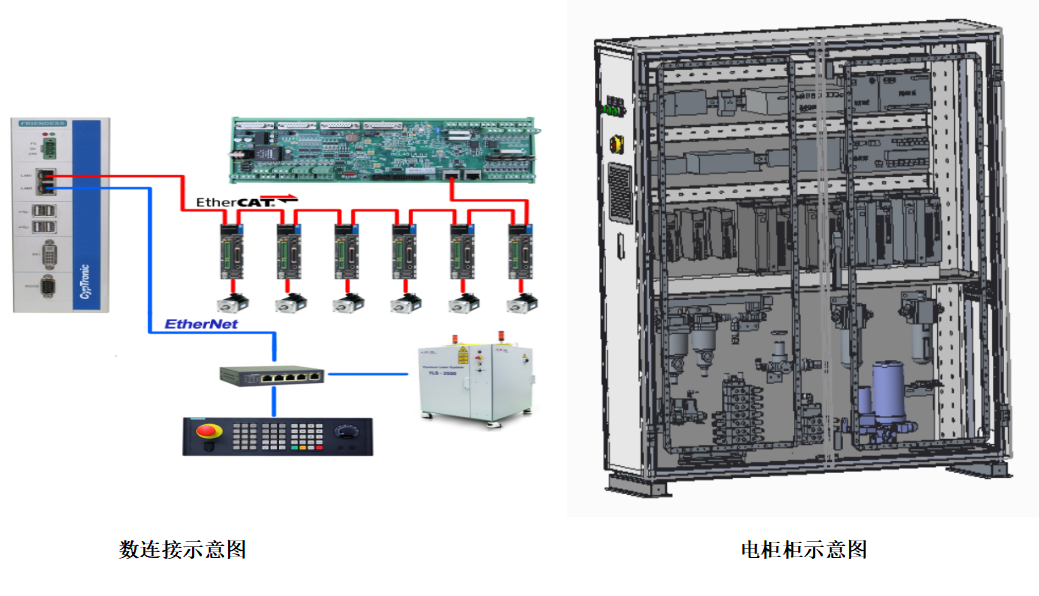
The low-voltage electrical system is located inside the electrical control cabinet and serves as the interface section for the electrical control of the entire machine. The power supply, relays, circuit breakers, contactors, servo drive system, and other components required by the electrical control system are all installed in the control cabinet. Bus-type motors are used to reduce wiring.
3000W Cutting Processing Speed Parameters
| Material | Thickness (mm) | Cutting Speed (m/min) | Piercing Time (s) | Assist Gas |
|---|---|---|---|---|
| Carbon Steel | 1 | 7–10 / 20–25 | 0.1 | Oxygen / Air |
| 2 | 5–7.5 / 13–17 | 0.1 | ||
| 3 | 3.0–3.5 / 5.5–7 | 0.1 | ||
| 4 | 3.5–4.5 | 0.2 | Nitrogen | |
| 6 | 2.4–2.6 | 0.4 | ||
| 8 | 1.6–2.3 | 0.4 | ||
| 10 | 1.4–1.7 | 0.5 | ||
| 12 | 0.9–1.2 | 0.8 | ||
| Stainless Steel | 1 | 20–25 | 0.1 | Nitrogen / Air |
| 2 | 12–15 | 0.2 | ||
| 3 | 7–9 | 0.3 | ||
| 4 | 3.5–4.5 | 0.4 | ||
| 6 | 1.3–1.8 | 0.6 | ||
| 8 | 0.8–1 | 0.8 | ||
| Aluminum Alloy | 1 | 20–25 | 0.1 | Nitrogen / Air |
| 2 | 13–17 | 0.1 | ||
| 3 | 6–8 | 0.2 | ||
| 4 | 3.5–4.5 | 0.4 | ||
| 5 | 2–3 | 0.4 | ||
| 6 | 1.3–1.8 | 0.6 | ||
| Brass | 1 | 22–26 | 0 | Nitrogen |
| 2 | 10–15 | 0.4 | ||
| 3 | 6–8 | 0.5 | ||
| 4 | 2.5–3.5 | 0.8 | ||
| 6 | 1–1.5 | 0.8 | ||
| Copper | 1 | 20–25 | 0 | Nitrogen |
| 2 | 9–12 | 0.1 | ||
| 3 | 3.5–5.5 | 0.3 | ||
| 4 | 2.2–2.5 | 0.4 | ||
| Column 1 Value 30 | Column 2 Value 30 | Column 3 Value 30 | Column 4 Value 30 | Column 5 Value 30 |
| Column 1 Value 31 | Column 2 Value 31 | Column 3 Value 31 | Column 4 Value 31 | Column 5 Value 31 |
Note: The gas purity, tube quality, and other factors may affect the cutting speed and quality. The listed speeds are for reference only.
Test Conditions:
Nitrogen pressure: ≥ 2.0 MPa
Air pressure: ≥ 1.5 MPa
Air flow rate: ≥ 2.5 m³/min
Oxygen pressure: ≥ 1.0 MPa
Water, Electricity and Gas Requirements
| Requirement Type | Related Data | Remarks / Requirements |
|---|---|---|
| Power Supply Requirement | 380V ±2% / 50Hz | 1. If the voltage fluctuation exceeds 5%, a voltage stabilizer must be installed. It is recommended to use a three-phase line-frequency stabilizer with a power rating not less than 60kVA. 2. Three-phase power supply imbalance must be less than 2.5% (Note: for a 400VAC / 50Hz to 380V ±2% / 50Hz power supply, sudden surges and sudden interruptions are not allowed, otherwise the laser may be easily damaged). 3. The cross-sectional area of a single power cable conductor must be no less than 16 mm². 4. The grounding resistance of the power supply grounding must be ≤3 Ω. 5. Three circuit breaker interfaces must be reserved for connecting the cutting machine power cables. |
| Cooling Water Requirement | Distilled Water / Deionized Water | 40L, conductivity less than 10 μs |
| Protective Gas Requirement | Related Data | Remarks / Requirements |
|---|---|---|
| Oxygen | Purity: ≥99.6% Gas purity below 99.6% will affect cutting performance and quality. Pressure: 1 MPa Flow Rate: ≥1 m³/min |
For cutting carbon steel and various iron plates, oxygen is used as the assist gas. It provides good cutting quality and high efficiency. |
| Nitrogen | Purity: ≥99.99% Gas purity below 99.99% will affect cutting performance and quality. Pressure: 2.5 MPa Flow Rate: ≥2.5 m³/min |
For cutting stainless steel, galvanized sheet, and similar materials, nitrogen is used as the assist gas for better cutting quality. |
| 1. Bottled gas must be equipped with a pressure regulating valve. 2. Oxygen (O2) pressure reducing valve: adjustable outlet pressure range 0.4 MPa–1.2 MPa, pressure fluctuation range 1%. 3. Nitrogen (N2) pressure reducing valve: adjustable outlet pressure range 0.4 MPa–5 MPa, pressure fluctuation range 1%. |
||
| Air | Working Pressure: ≥1.3 MPa Flow Rate: ≥1.8 m³/min |
1. If air is required for cutting, the user must prepare an air compressor, refrigerated dryer, gas storage tank, and four-stage filtration system (filtration accuracy: 0.01 micron). 2. The gas entering the laser cutting machine must be free of water and oil, otherwise it will affect cutting quality and the service life of consumable parts. 3. Condensation temperature must not exceed 5°C; dew point must be below 5°C. 4. Oil content ≤0.003 ppm; solid particle size ≤0.01 micron. |
| Installation Environment | Related Data | Remarks / Requirements |
|---|---|---|
| Temperature Requirement | 5–30 °C | For compact laser equipment, it is recommended to place the machine in a separate air-conditioned isolation room. |
| Humidity Requirement | < 70% | |
| Foundation Requirement | Level ground Free from vibration |
1. If there is strong vibration, anti-vibration trenches must be provided. 2. The foundation must ensure sufficient strength and must not settle. 3. Complete the foundation work according to the foundation installation drawing provided by us. |
| Remarks: The equipment installation site must have good ventilation conditions, and be free from dust, corrosive substances, and water leakage. The control cabinet and laser source are the core components of the equipment, and should be protected from electromagnetic interference caused by surrounding equipment such as electric arc welders and discharge processing machines, so as not to affect the normal operation of the equipment. | ||
FAQ
1. What material and structure are used for the machine bed?
The machine bed is made of welded steel plates and tubular sections, with multiple reinforcing rib structures connecting the transverse and longitudinal bed sections to ensure excellent rigidity and stability.
2. How is welding deformation controlled during bed fabrication?
The weld seams on both sides are evenly distributed, and symmetrical as well as staggered welding methods are used to reduce welding deformation. Each machine bed also has its own annealing report based on its serial number.
3. What are the advantages of the semi-automatic loading and unloading system?
The semi-automatic loading and unloading system can automatically load multiple raw materials continuously, improve loading efficiency, ensure accurate positioning through centering clamping jaws, and make unloading more convenient.
4. How does the machine ensure motion stability and safety of the X, Y, and Z axes?
The gantry is annealed to eliminate internal stress and improve rigidity and stability. Limit switches and elastic buffer pads are used for travel protection, while the Z-axis is driven by a servo motor and linear module, with proximity switches at both ends to ensure safe and reliable operation.
5. What features does the cutting head have to improve performance and maintenance?
The cutting head offers real-time sealing monitoring, anti-collision design, a dust-proof cover for the optical lens area, and a high-precision capacitive sensor automatic tracking system, which together improve stability, extend lens life, and reduce maintenance costs.
6. How does the cooling system protect the laser source and cutting head?
The machine uses a professional laser chiller with dual-circuit temperature control, allowing separate temperature management for the laser source and cutting head. It also includes multiple alarm functions such as water pressure, temperature, voltage, and fault alarms.
7. What are the main advantages of the CNC control system?
The CNC system provides fast interpolation, stable and efficient corner cutting, segmented and progressive piercing, automatic and manual sorting, path optimization, kerf compensation, tube rotation center positioning, and many other intelligent cutting functions.
8. What is included in the low-voltage electrical system?
The low-voltage electrical system includes the power supply, relays, circuit breakers, contactors, and servo drive system, all integrated inside the electrical control cabinet. Bus-type motors are used to reduce wiring and simplify the electrical layout.
